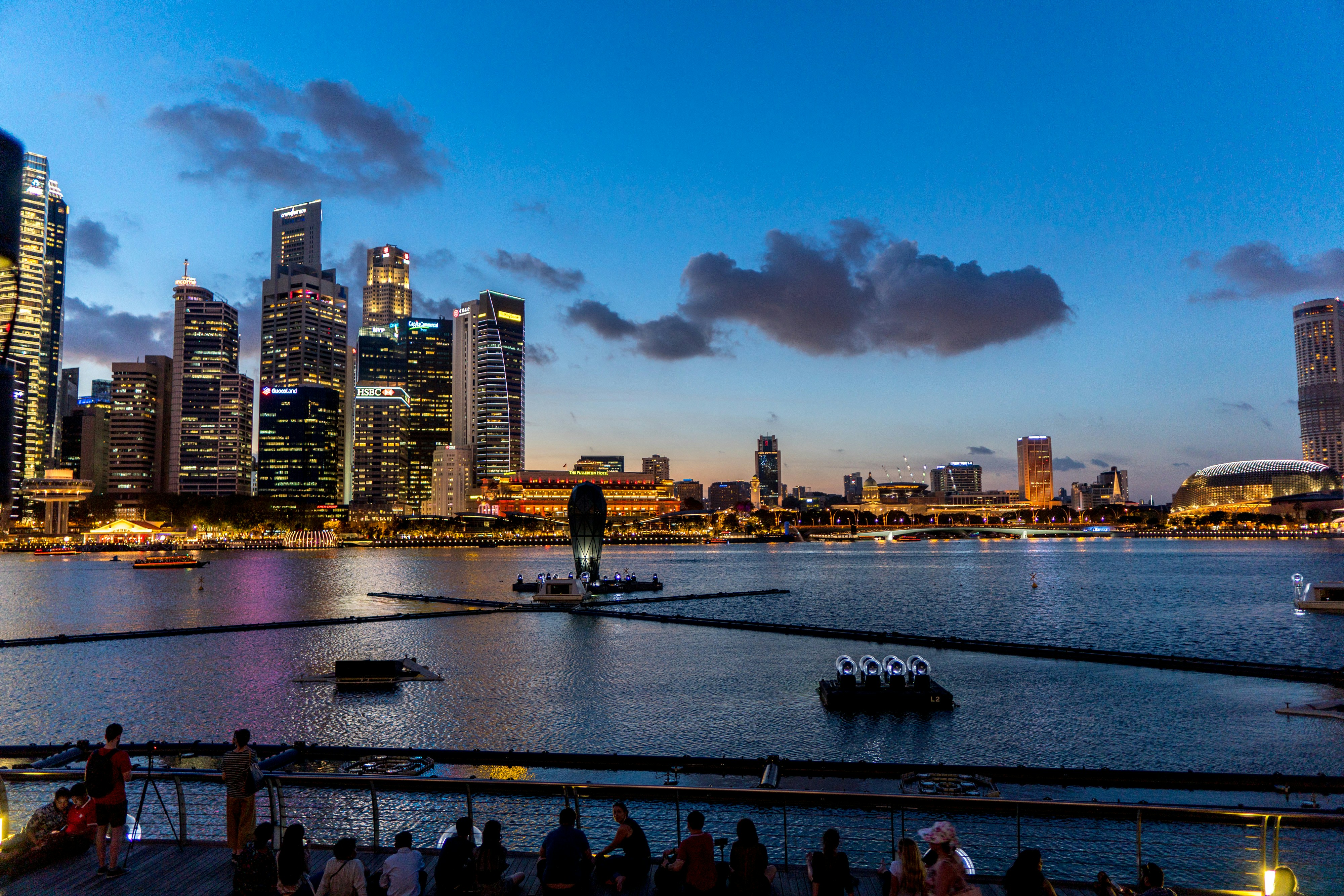
Last week, we looked at the structures that make Singapore a lasting destination for capital. The next question is where that capital goes, and what supports the income of the assets it buys. In the office market, the answer lies in a simple imbalance: quality space is scarce, while tenants keep committing to it. That imbalance is most visible in Grade A towers, but it is also opening opportunities in well-located Grade B buildings.
A Shrinking Pool of Prime Space
The latest figures show how tight Singapore's prime office market has become. Core CBD Grade A rents rose 2.0% in the third quarter of 2026 to S$12.75 per square foot per month, their fastest quarterly growth since 2022, while vacancy fell from 3.3% to 2.6% (CBRE, 2026). No major office completions were delivered during the quarter, and no new supply is expected for the rest of the year. In less than two years, vacancy has fallen from 7.8% after the completion of IOI Central Boulevard Towers, and CBRE expects full-year rental growth to exceed 5%, which would be the strongest annual performance since 2022 (CBRE, 2026).
The pipeline offers little near-term relief. Newport Tower in Tanjong Pagar is the only major office completion slated for 2027, with more substantial supply expected only from 2028 (Khan, 2026). For tenants approaching lease expiry, buildings that are still under construction cannot meet today's needs. Where suitable alternatives are limited, many occupiers are therefore choosing to renew their leases rather than relocate (Colliers, 2026).
Tenants Are Still Committing to Space
Limited supply alone does not drive rents; demand has to be there too. Financial services firms led leasing in the third quarter, while technology and artificial intelligence companies expanded across both flexible workspaces and dedicated offices (CBRE, 2026). Large, contiguous floor plates are also in short supply, pushing occupiers that need to move quickly toward buildings with modern specifications and efficient layouts (Colliers, 2026).
Shifting Tenant Preferences Across Office Grades
This creates an opening for well-located Grade B offices. Tenants that need a central address but cannot justify prime rents are widening their search, and leasing activity broadened across both Grade A and Grade B buildings at the end of 2025, with cost-conscious occupiers drawn to fitted, ready-to-move-in space (Colliers, 2026). For a tenant, this can mean a central location at a meaningfully lower rent; for an owner, it means a deeper pool of potential occupiers. The benefit is selective, however. Not every Grade B building will gain, and Grade A rental growth cannot simply be applied to an older asset, as connectivity, upkeep, layout and the total cost of occupation still decide where tenants go.
Creating Upside Through Asset Enhancement
Owners can also improve how an existing building competes through asset enhancement initiatives (AEI). Colliers expects secondary assets to rely increasingly on value-add execution to stay competitive (Colliers, 2026), and a refreshed lobby, upgraded common areas or better access can lift the experience of tenants and visitors without a full redevelopment. The test for any such investment is whether it helps retain tenants, attract new ones and support achievable rents at a sensible cost. A refurbishment budget should therefore be weighed against the expected leasing benefit, disruption to existing tenants and future maintenance costs.
The Takeaway
Tight prime supply and steady tenant demand give Singapore's office market a supportive backdrop until new supply arrives from 2028, but the opportunity extends beyond Grade A. Well-located Grade B offices, improved through targeted enhancements, can capture tenants priced out of prime space and turn a favourable market into durable income.
References
CBRE. (2026, September 30). Singapore Grade A office market posts strongest quarterly rental growth since 2022 as supply constraints intensify. https://www.cbre.com.sg/press-releases/singapore-q3-2026-office-sector-updates
Colliers. (2026, January 7). CBD office market ends 2025 on firm footing; rents rise 0.8% QoQ, vacancy tightens to 4.0%. https://www.colliers.com/en-sg/news/20260107-q4-singapore-office-market-report-colliers-press
Colliers. (2026, March 30). Prime CBD office rental growth accelerates in the first quarter. https://www.colliers.com/en-sg/news/20260330-singapore-office-insights-q1-2026-colliers-press
Colliers. (2026, July 15). Singapore occupiers look beyond 2026 as future supply tightens. https://www.colliers.com/en-sg/news/202607-singapore-office-insights-q2-2026-colliers-press
Khan, I. (2026, September 28). CBD office tightness drives another quarter of rental growth as vacancy hits near-three-year low. JLL. https://www.jll.com/en-sea/newsroom/cbd-office-tightness-drives-another-quarter-of-rental-growth-as-vacancy-hits-near-three-year-low