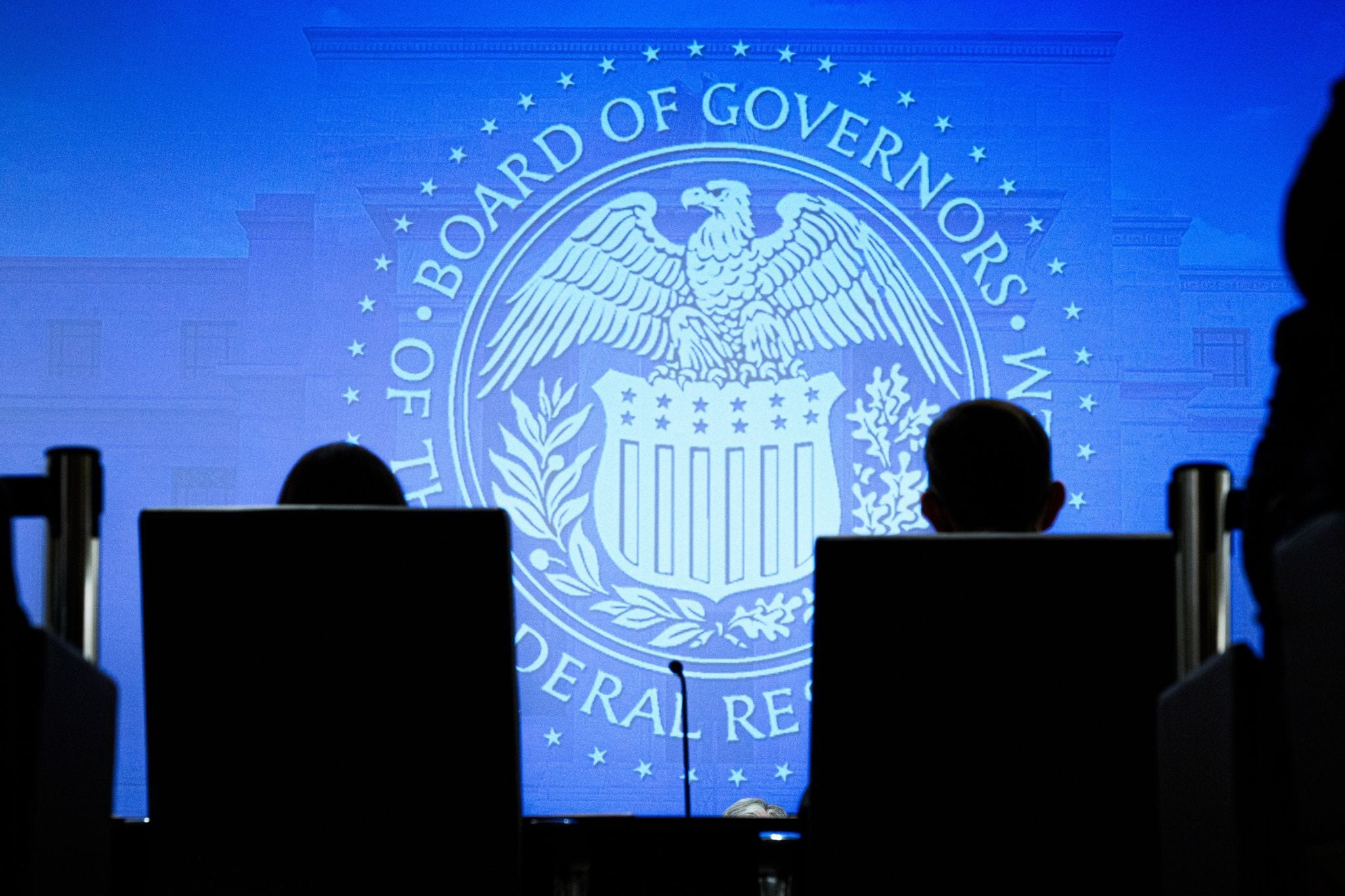
In our last article, we made the case for alternatives as a source of steady income. This week, we look at what the latest interest rate developments, including the US Federal Reserve’s October decision and last week’s US midterm elections, mean for private credit.
A Pause, Not a Turning Point
On 28 October, the Fed kept its target range at 3.75% to 4.00%, six weeks after raising rates for the first time in three years. The decision was not unanimous, as two of the 12 voting members preferred another quarter-point hike, and the Fed noted that inflation remains elevated while the economy is expanding at a strong pace (Federal Reserve, 2026).
Since then, two events have shaped the outlook. Democrats won control of both the House and the Senate in the 3 November midterm elections, and investors expect a divided government to limit new spending and borrowing. The 10-year Treasury yield fell to around 4.9% after the results (CNBC, 2026), down from an October peak that was its highest level since 2002 (VRC, 2026).
Expectations for short-term rates, however, have barely eased. US employers added 165,000 jobs in October and unemployment fell to 4.1%, lifting market-implied odds of a December rate hike to about 76% (Axios, 2026). With the Fed’s next decision due on 9 December, rates look set to stay higher for longer, with different implications for borrowers and lenders.
What It Means for Borrowers
Most private credit loans carry floating interest rates. Borrowers typically pay a benchmark rate, usually the Secured Overnight Financing Rate (SOFR) in the US, plus a fixed spread. With three-month SOFR at around 4.1%, a company paying SOFR plus 5.5% faces an annual interest rate of roughly 9.6%, and a December hike would add a further 0.25%.
The pressure is concentrated among companies that borrowed in 2021 and 2022, when SOFR was close to zero. These borrowers now carry debt of around 6 to 7 times their annual earnings and can cover their interest costs only 1.7 to 1.8 times. Loans written more recently, under more conservative assumptions, are in a healthier position, with interest coverage of 2.2 to 2.3 times (VRC, 2026).
This divide is reflected in default data. Fitch’s US private credit default rate reached a record 6.3% in the third quarter of 2026. However, most of these defaults took the form of loan extensions, deferred interest and payment-in-kind (“PIK”) arrangements, where unpaid interest is added to the loan balance, rather than outright missed payments (Investment Executive, 2026). In other words, stress is largely confined to older, highly leveraged loans and is being managed through restructuring rather than widespread losses.
What It Means for Lenders
For lenders, higher rates support income. Because benchmark rates remain elevated, floating-rate loans continue to generate attractive returns. Unitranche loans, which combine senior and junior debt into a single facility, yielded approximately 9.3% to 10.1% in the third quarter of 2026 (VRC, 2026).
Demand for private loans is also likely to stay firm. Around 40% of loans in one widely tracked US direct-lending index are due to mature over the next three years, and many borrowers will need to refinance at today’s rates rather than wait for cheaper financing (VRC, 2026). This allows lenders to be selective and to negotiate tighter terms, such as stronger covenants and lower leverage. Lenders deploying fresh capital are particularly well placed, as they can lend at today’s higher yields and stronger terms without legacy exposure to loans written when rates were near zero.
Selection still matters. Industrial and manufacturing borrowers, as well as consumer products and services companies, each recorded default rates of 9.7% in the third quarter, compared with just 0.6% for software companies (Investment Executive, 2026). Careful sector and borrower selection allows lenders to capture attractive yields while limiting exposure to weaker credits.
Australia: Higher Rates, Higher Standards
Australia illustrates these dynamics clearly. On 3 November, the Reserve Bank of Australia (RBA) raised its cash rate by 0.25% to 4.85% (RBA, 2026), well above the US federal funds rate. For lenders offering floating-rate loans, this translates directly into higher income.
Australian private credit is also predominantly asset-backed, with much of its lending secured against real estate. As banks have pulled back from riskier property lending, private credit has become an important source of funding for developers (Reuters, 2026). Security over real assets gives lenders collateral to rely on, although its protection depends on how loans are structured and monitored.
That distinction has come into sharp focus. Following the A$3.4 billion collapse of Sydney homebuilder Bathla, which borrowed from an extensive network of private credit lenders, ASIC has launched a formal investigation and stepped up its scrutiny of the sector. This week, it halted new investment into two funds over concerns about how their Bathla exposure was disclosed, and a separate report found that many funds remain too opaque and complex (Reuters, 2026). While this marks a period of adjustment, closer scrutiny should favour lenders with transparent reporting, conservative loan-to-value ratios and rigorous credit processes.
The Takeaway
The Fed’s October hold is a pause rather than a turning point. While the midterm results have eased longer-term bond yields, borrowing costs are likely to stay high, and may rise further, in both the US and Australia. For private credit lenders, this supports attractive floating-rate income, while stress remains concentrated in older, highly leveraged loans. In Australia, higher base rates support lender income, while closer regulatory scrutiny is raising the bar on transparency and governance across the sector. At Altallo, we believe disciplined underwriting, sound collateral and active monitoring are key to capturing these opportunities.
References
- Axios. (2026, November 6). U.S. labor market zooms ahead with 165,000 jobs added in October. https://www.axios.com/2026/11/06/october-2026-jobs-report-unemployment-165000
- CNBC. (2026, November 4). 10-year Treasury yield slides as traders mull over Democrats’ midterm victories, oil prices drop. https://www.cnbc.com/2026/11/03/treasury-yields-fall-as-democrats-win-big-in-us-midterm-elections.html
- Federal Reserve. (2026, October 28). Federal Reserve issues FOMC statement [Press release]. https://www.federalreserve.gov/newsevents/pressreleases/monetary20261028a.htm
- Investment Executive. (2026, October 30). U.S. private credit defaults rise in Q3: Fitch. https://www.investmentexecutive.com/news/markets/u-s-private-credit-defaults-rise-in-q3-fitch/
- Reserve Bank of Australia (RBA). (2026, November 3). Statement by the Monetary Policy Board: Monetary policy decision [Media release]. https://www.rba.gov.au/media-releases/2026/mr-26-30.html
- Reuters. (2026, November 10). Australia’s corporate regulator starts official probe into $2.3 billion Bathla collapse. https://www.investing.com/news/economy-news/australias-corporate-regulator-starts-official-probe-into-23-billion-bathla-collapse-5012967
- Valuation Research Corporation (VRC). (2026, October 8). Private market trends: Q3 2026 private credit & equity update. https://www.valuationresearch.com/insights/private-credit-trends-q3-2026/